Seedream 40 AI image models, prompts, and creative workflows

Seedream 40

AI image models, prompts, and creative workflows

Latest Articles

The Locked-Field Ledger: Localizing One AI Scene Across US Markets Without Recasting
Creative Workflows

The Locked-Field Ledger: Localizing One AI Scene Across US Markets Without Recasting

A single approved AI campaign scene rarely travels unchanged from Phoenix to Chicago to Brooklyn. This locked-field ledger method separates identity anchors from environmental variables, giving teams a controlled prompt-delta process and a lightweight regional approval route.

The Handoff Dossier: Making Provenance a Routine Part of AI Image Delivery
Creative Workflows

The Handoff Dossier: Making Provenance a Routine Part of AI Image Delivery

US clients increasingly want to know not only what an AI-generated image looks like but how it was produced. A lightweight handoff dossier can capture model version, prompt, settings, approvals, and disclosure language without turning every delivery into a legal scramble.

The Unpainted Third: Specifying Type-Safe Zones Before an AI Render Is Approved
Creative Workflows

The Unpainted Third: Specifying Type-Safe Zones Before an AI Render Is Approved

AI renders often pass creative review and fail production review because no one reserved a credible home for the headline, price, and legal line. This article defines a copy-reserve contract that teams can specify in prompts, test across aspect ratios, and enforce before approval.

Judge the Tile, Not the Canvas: A Final-Size Review Protocol for AI Renders
Creative Workflows

Judge the Tile, Not the Canvas: A Final-Size Review Protocol for AI Renders

AI renders are routinely approved at 100 percent on a large monitor and then judged by the public at 300 pixels wide. This protocol moves the decision to the dimensions that will actually ship: exported size decks, an arm's-length phone test, and a written record of which details survive the shrink.

Mood Board, Not Blueprint: A Reference-Weighting Protocol for AI Image Work
Creative Workflows

Mood Board, Not Blueprint: A Reference-Weighting Protocol for AI Image Work

Reference images can clarify a visual direction faster than any written brief, but they can also import unwanted composition, identity, and licensing risk. This protocol helps design teams separate useful direction from incidental detail before an AI render begins to copy the board rather than answer the brief.

Framing Is Direction: A Camera Vocabulary for Revising Approved AI Renders
Creative Workflows

Framing Is Direction: A Camera Vocabulary for Revising Approved AI Renders

When an approved AI render needs variation, vague requests for a wider or closer frame usually produce a different picture rather than a controlled one. This guide translates directing language—lens, height, distance, angle, and subject-to-frame relationship—into prompt revisions that preserve the client-approved image while changing only the camera.

The Light Meter Goes Into the Prompt: A Studio Budget for AI Renders
Creative Workflows

The Light Meter Goes Into the Prompt: A Studio Budget for AI Renders

Lighting prompts fail when they are treated as mood adjectives rather than measurable studio decisions. This workflow converts key-to-fill ratio, modifier size, color temperature, and falloff into a prompt budget that art directors can brief and designers can test across models before a US client campaign begins.

Beyond the Subscription Line: Pricing AI Imagery by Approved Deliverables
Creative Workflows

Beyond the Subscription Line: Pricing AI Imagery by Approved Deliverables

The monthly software invoice is the smallest number in an AI image engagement and the least useful one for pricing. This worksheet breaks a project into five cost buckets and converts them into a single figure — cost per approved asset — that studios can defend in a fixed-fee proposal, with benchmarks for boutique, agency, and high-volume retail runs.

Casting Without a Casting Director: Auditing Faces Across an AI Image Set
AI Image Models

Casting Without a Casting Director: Auditing Faces Across an AI Image Set

An AI campaign set can clear every technical check and still read as one person photographed two hundred times. This audit gives studios a ten-minute grid review, a set of prompt and reference-image adjustments that shift the distribution, and a one-page casting memo that shows clients the casting intent was tested rather than assumed.

Do Brand Colors Survive the Prompt? A Swatch Protocol for AI Image Models
AI Image Models

Do Brand Colors Survive the Prompt? A Swatch Protocol for AI Image Models

Brand palettes can drift the moment a color name enters a prompt, changes lighting, or meets a new material. This swatch-based protocol gives design teams a repeatable way to test Seedream and peer models, record color movement, and set acceptance criteria before production.

From Pixels to Press: Qualifying AI Imagery for Packaging and Poster Runs
Creative Workflows

From Pixels to Press: Qualifying AI Imagery for Packaging and Poster Runs

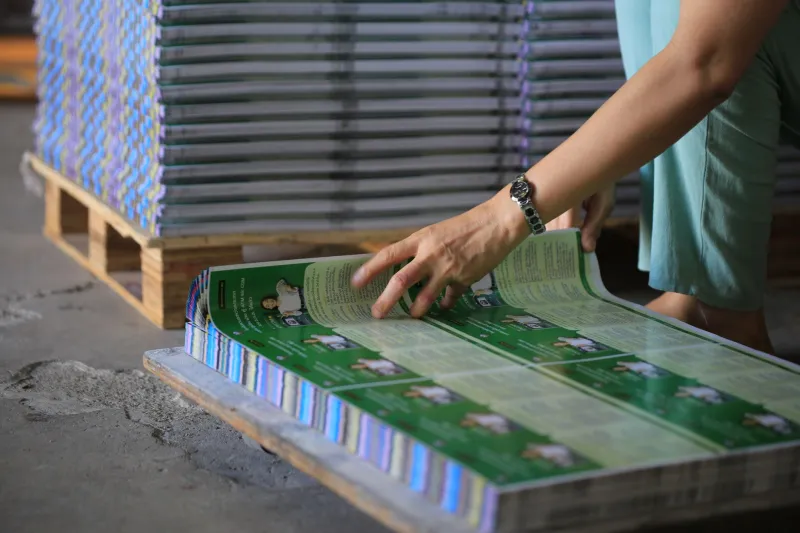
A high-resolution AI render can still collapse on press when texture, bleed, halftone behavior, and vendor color profiles are left untested. This studio checklist helps US design teams qualify AI-assisted imagery before files are released to print.

When the Model Moves Underneath You: Change Control for Client-Approved Imagery
AI Image Models

When the Model Moves Underneath You: Change Control for Client-Approved Imagery

A model update rarely announces itself. A hosted endpoint refreshes, a safety filter tightens, a default stylization drifts half a stop warmer — and approved client visuals no longer match the deck that was signed. Treat the update as a design change, with a control set and a paper trail, rather than a fire drill.

The Other Ninety-Nine Renders: An Archive Discipline for AI Image Variants
Creative Workflows

The Other Ninety-Nine Renders: An Archive Discipline for AI Image Variants

Generation is the inexpensive part. The costly part arrives months later, when a client asks for the version with the warmer light and nobody can locate it. A three-bucket taxonomy — retire, retain, reuse — gives studios a defensible way to close out a variant set without burying the keepers.

The Brief Comes First: A Repeatable Route from Art Direction to AI Renders
Creative Workflows

The Brief Comes First: A Repeatable Route from Art Direction to AI Renders

Prompt-only workflows can make every revision feel like a fresh gamble. This article outlines a one-page visual direction brief that separates creative intent from model instruction, then shows how to translate it into Seedream-ready prompts and cleaner client approvals.

The Contract Behind the Canvas: A Procurement Checklist for AI Image Tools
AI Image Models

The Contract Behind the Canvas: A Procurement Checklist for AI Image Tools

Before an AI image tool becomes part of the production pipeline, US studios need to read the commercial terms. This procurement checklist covers output ownership, training on inputs, retention, indemnification, filters, deprecation, and disclosure, with a short script for legal and client conversations.

Your Prompt Library Is Not Portable Until You Document These Four Model Behaviors
AI Image Models

Your Prompt Library Is Not Portable Until You Document These Four Model Behaviors

Prompts tuned to one image model rarely survive a move to another intact. This technical playbook shows how to document syntax, reference-image behavior, negative prompts, and version drift so US design teams can switch models without restarting production.

Seven Checks Before an AI-Assisted Holiday Campaign Leaves the Studio
Creative Workflows

Seven Checks Before an AI-Assisted Holiday Campaign Leaves the Studio

Holiday hero images carry licensing, likeness, disclosure, and brand-safety risk that a last-minute review will not catch. This opinionated 2026 preflight gives US design teams a practical checklist to run before the campaign goes live.

Prompt Debt Is Quietly Taxing Your Design Team: A 2026 Operating Model
Creative Workflows

Prompt Debt Is Quietly Taxing Your Design Team: A 2026 Operating Model

Undocumented prompt libraries behave like design debt: they slow reuse, obscure decisions, and break when models or brand rules change. A lightweight operating model for naming, versioning, templates, and handoff can keep AI image production auditable.

A Studio-Ready Scorecard for Stress-Testing AI Image Models
AI Image Models

A Studio-Ready Scorecard for Stress-Testing AI Image Models

Forty practical US design briefs, four scoring dimensions, and a repeatable process for comparing Seedream 40 with competing image models. The result is less a leaderboard than a decision tool for studios that need predictable output.